







For much of the sustainability movement’s history, waste was treated as the end of a story. Companies manufactured products, consumers consumed them, and whatever remained became a disposal problem. Landfills expanded, waterways became clogged, and communities struggled with the environmental consequences of an economy that was exceptionally good at producing things but far less capable of dealing with what was left behind.
Across the Philippines, some of the country’s largest corporations are looking at waste and seeing something entirely different. They are seeing fuel. They are seeing raw materials. They are seeing new supply chains. Most importantly, they are seeing economic value.
This shift may appear subtle, but it represents one of the most important developments in corporate sustainability. For years, environmental initiatives were often justified through the language of responsibility. Companies were encouraged to reduce emissions because it was good for the planet. They were asked to improve waste management because it was good for communities. They were urged to embrace sustainability because it was the right thing to do.
While those arguments remain valid, they were often insufficient. Sustainability was frequently viewed as a cost center, an obligation that companies had to manage rather than an opportunity they could pursue. It belonged to sustainability departments, corporate affairs teams, and ESG reports. It rarely occupied the same strategic space as growth, productivity, or competitiveness.
What is happening today suggests a fundamental change in mindset. Increasingly, companies are investing in sustainability not because they are required to, but because they are discovering that sustainability can make them more efficient, more resilient, and ultimately more profitable.
Few developments illustrate this better than the growing interest in biomass.
The Philippines is an agricultural country. Every harvest season produces mountains of rice husks, coconut shells, sugarcane bagasse, corn residue, coffee waste, and other agricultural byproducts. For generations, much of this material was treated as an unavoidable consequence of production. Some were burned. Some were discarded. Some simply decomposed in fields.
Yet what appears to be waste to one industry can be a resource to another.
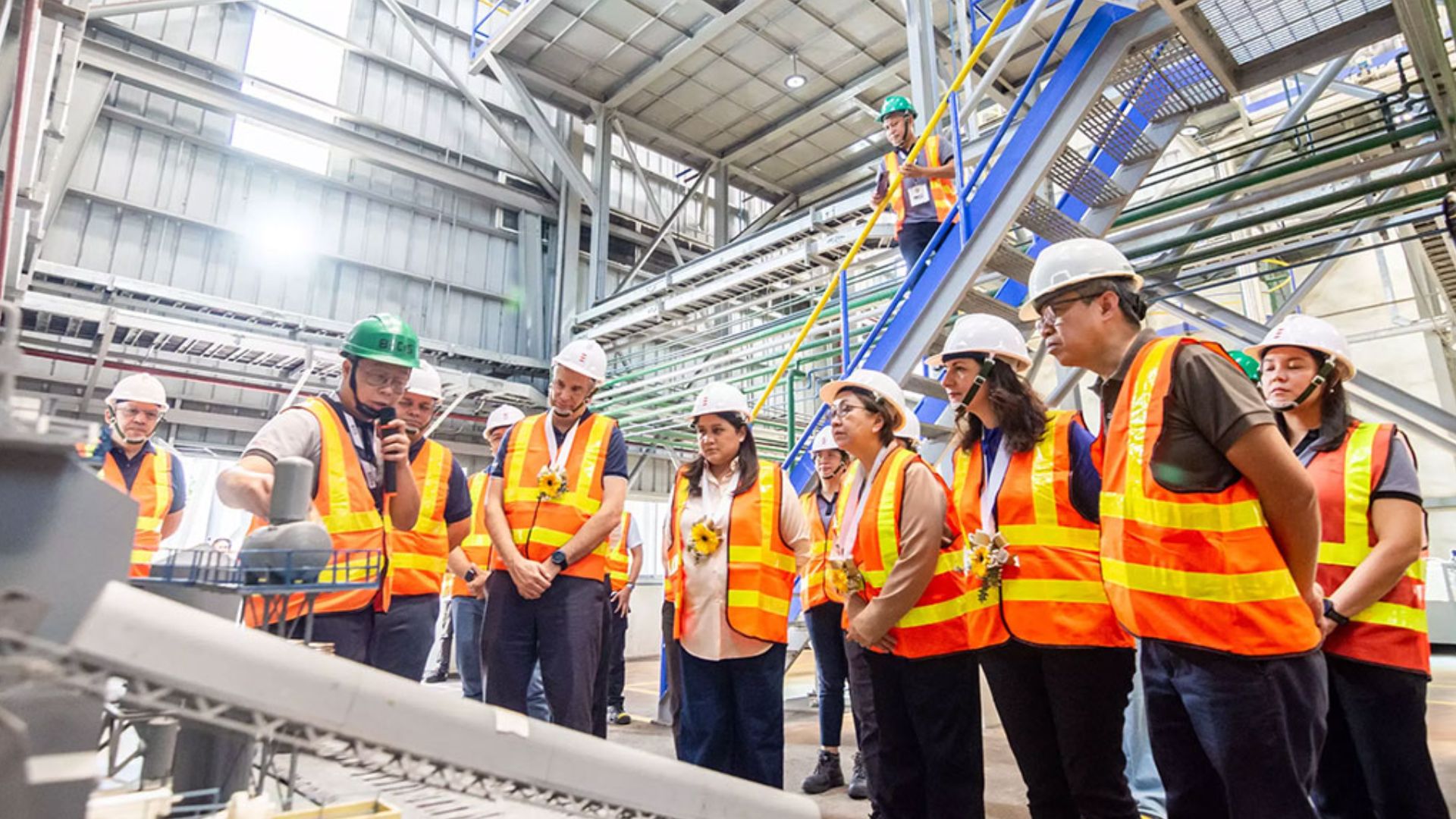
This realization is increasingly shaping corporate investments. Nestlé Philippines recently inaugurated a biomass facility in Laguna that utilizes agricultural waste to support manufacturing operations. The move forms part of the company’s broader net zero strategy, but it also reflects something larger than climate ambition alone. Similar thinking can be found elsewhere. The sugar industry has long used bagasse, the fibrous residue left after sugar extraction, to generate power for mills and surrounding facilities. Companies such as Victorias Milling Co. have demonstrated for decades that agricultural waste can become a valuable source of energy rather than a disposal burden. Energy firms such as AboitizPower have invested in biomass generation as part of broader renewable energy portfolios, while food and manufacturing companies continue exploring alternative fuels as they seek to reduce exposure to volatile energy markets.
Viewed individually, these projects may appear unrelated. Viewed collectively, they reveal an important trend. Sustainability is moving away from compliance and toward competitiveness.
This evolution could not come at a more important time. The Philippines remains highly vulnerable to energy shocks. A conflict in the Middle East, disruptions in global shipping routes, or sudden spikes in oil prices can quickly ripple through the economy. Manufacturers face higher operating costs. Logistics providers absorb rising fuel expenses. Consumers encounter inflation. Entire industries become vulnerable to circumstances over which they have little control.
For business leaders, this reality raises a difficult question. How do you build resilience in an increasingly uncertain world?
Part of the answer may lie in resources that have been hiding in plain sight.
Agricultural waste offers something that imported fuel cannot: local availability. It transforms what was previously considered a liability into a productive asset. It allows companies to diversify energy sources and reduce dependence on external markets. Sustainability, in this context, ceases to be primarily an environmental initiative. It becomes a business strategy.
That distinction matters because it may determine which sustainability initiatives ultimately succeed.
Around the world, sustainability is entering a period of scrutiny. Economic pressures, geopolitical uncertainty, and shifting political priorities have led some organizations to question earlier commitments. ESG has become a subject of debate in boardrooms and political circles alike. Yet while rhetoric fluctuates, investments in energy efficiency, renewable energy, circular economy systems, and waste valorization continue to move forward.
The reason is simple. Businesses may disagree about sustainability narratives, but they rarely disagree about reducing costs, managing risk, and creating value.
This is why biomass deserves greater attention than it typically receives. It sits at the intersection of several national priorities. It contributes to climate goals. It strengthens energy security. It creates opportunities for rural communities. It supports agricultural producers. It reduces waste. It improves operational resilience.
Few sustainability initiatives can claim to address so many challenges simultaneously.
More importantly, biomass challenges a long-standing assumption that environmental responsibility and business performance exist in tension with one another. For decades, discussions about sustainability were framed as a trade-off. Companies were expected to sacrifice short-term profits in exchange for long-term environmental benefits. Biomass suggests a different possibility. It demonstrates that environmental stewardship can generate economic value and that economic value can accelerate environmental progress.
Perhaps that is the lesson worth paying attention to.
The future of sustainability in the Philippines may not be driven by regulation alone. It may not be driven by activism, investor pressure, or corporate commitments. Those forces will remain important, but the real catalyst may be something much simpler. Sustainability gains momentum when companies discover that doing the right thing also happens to be good business.
In the end, the most transformative sustainability innovations are often not the ones that ask us to consume less. They are the ones that teach us to see differently. What once appeared to be waste becomes fuel. What once seemed to have no value becomes an asset. And what began as an environmental solution becomes an economic opportunity.
That is how waste becomes wealth.